2025
Training Platform
Services
UI Design, UX Design, Project Planning, Strategy
Client
Confidential
Sector
Customer Service, EdTech, AI Training Systems
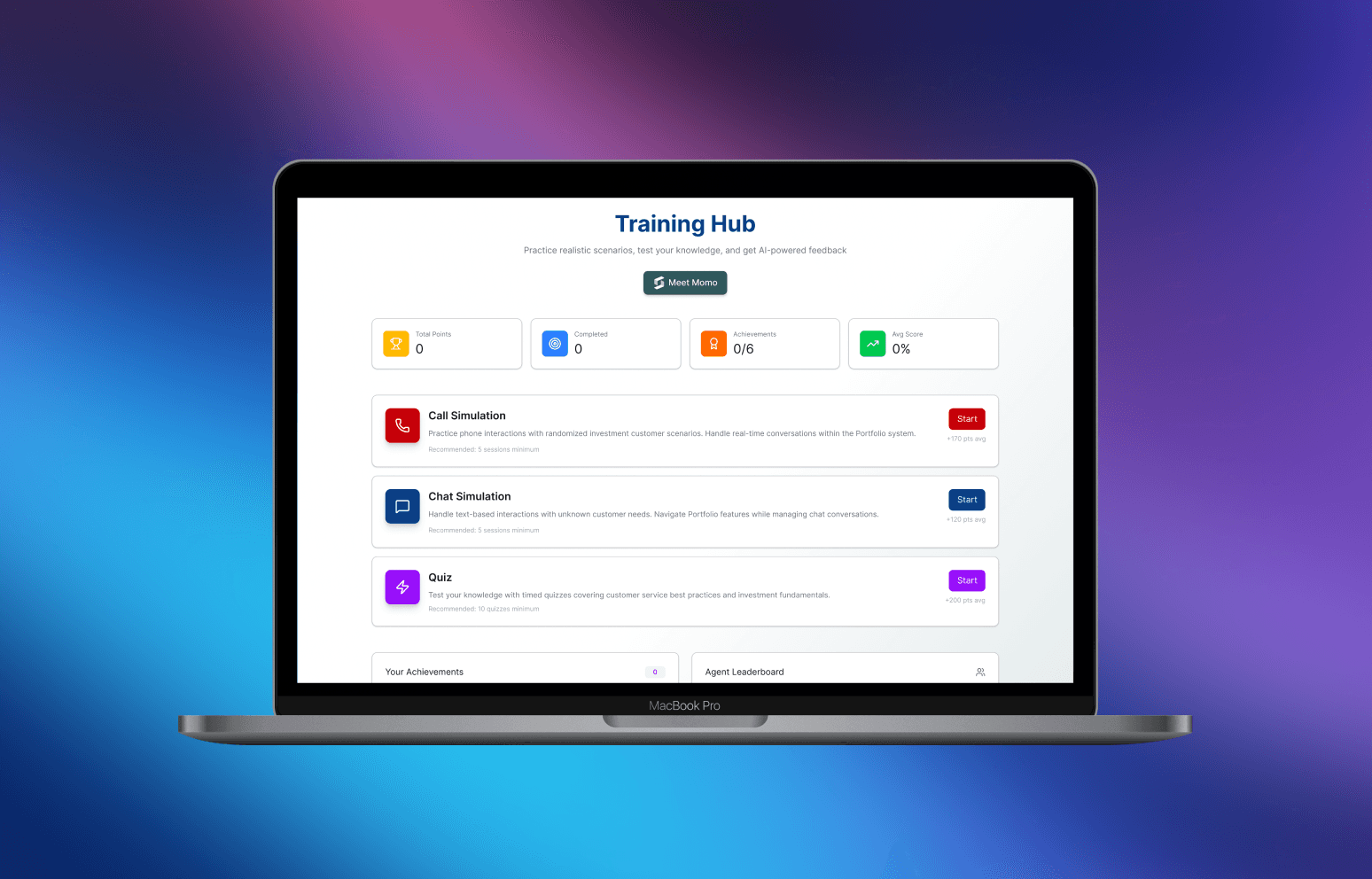
Reimagining How Call Center Agents Learn and Improve
AI-Driven Feedback
Interactive Learning
Modular Architecture
Realistic Scenarios
Overview
This 5-day proof of concept was created as part of my work at Retro Rabbit, exploring how AI and interactive simulations could transform customer service training for call center agents. The goal was to replace static training manuals and rigid assessments with a dynamic, simulation-based experience, one that feels realistic, personalized, and measurable. I focused on designing a platform that mirrors the environment agents actually work in, complete with live customer interactions, guided learning from an AI coach, and clear performance feedback. The outcome was a system that not only teaches procedures, but builds confidence and adaptability, the two hardest skills to train for in customer service.
Legacy System, Real Experience
Immersive Practice in a Safe Environment
Agents were originally trained through outdated processes that lacked real-world context or feedback. My approach was to recreate the Portfolio system (used in their live environment) within a simulation framework, allowing agents to practice workflows safely and confidently. Learners interact with dynamic customer profiles, completing realistic service tasks while receiving feedback on tone, accuracy, and decision-making. This setup helps bridge the gap between theory and live performance, giving learners a chance to make mistakes, learn, and improve without pressure.
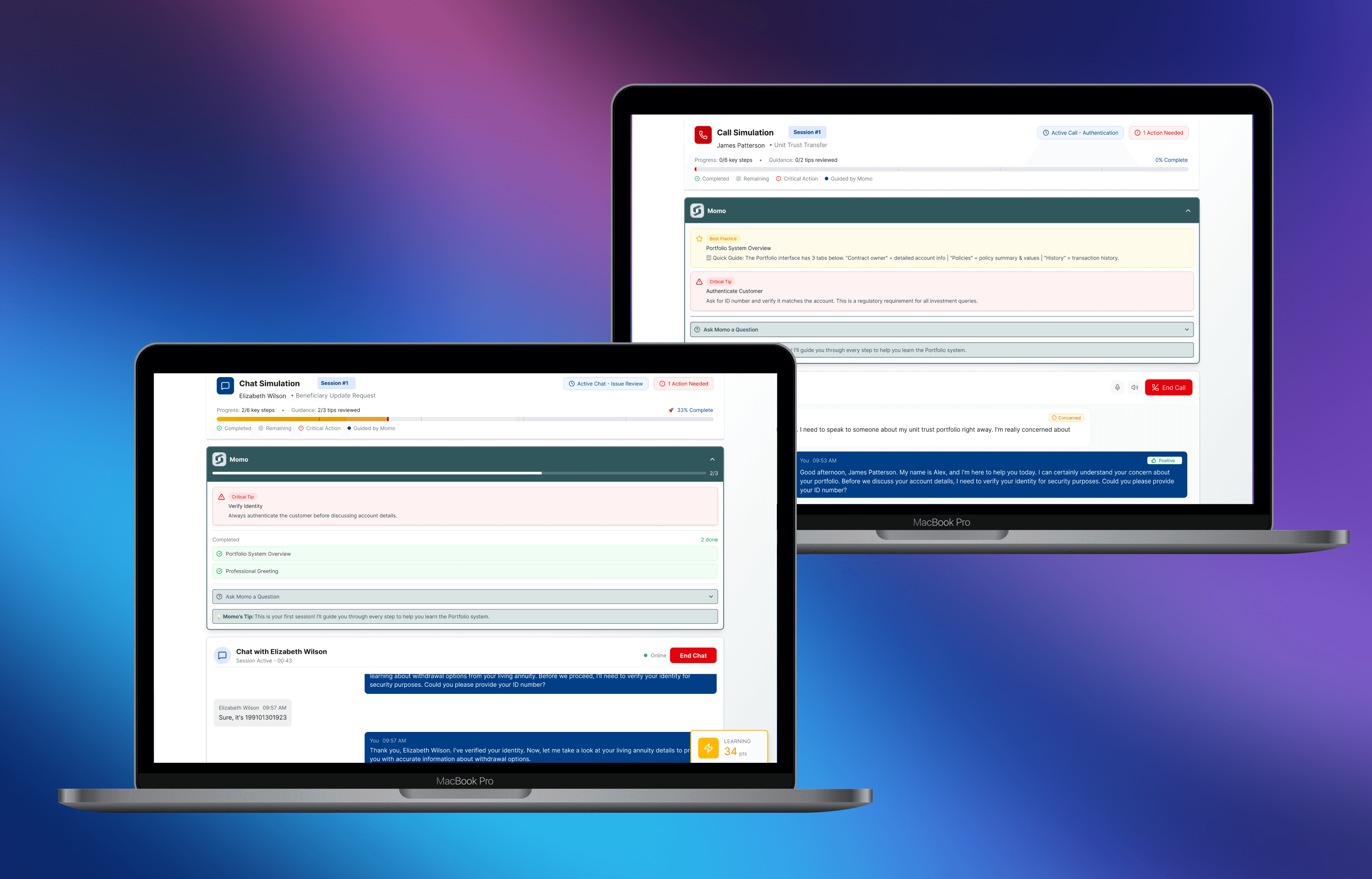
Momo – Adaptive AI Coach
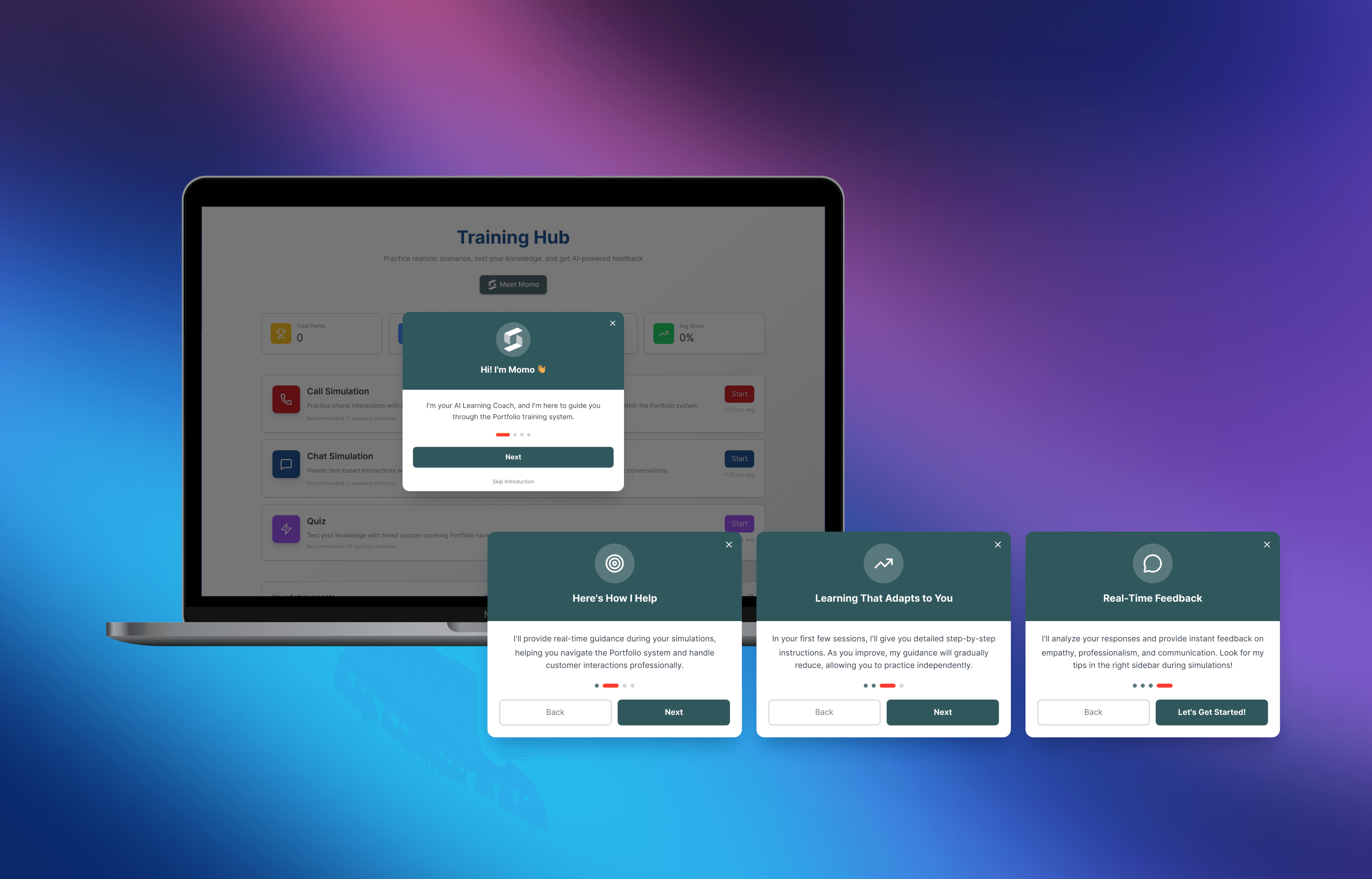
Personalized Guidance at Every Level
A recurring issue in call center training is that one-size-fits-all feedback doesn’t support different learning speeds or skill levels. To solve this, I designed Momo, an AI-powered learning assistant that adapts to user proficiency. Beginners receive guided, step-by-step help, intermediate learners get subtle hints and context prompts and advanced users experience minimal intervention, all levels simulating live calls. Momo also interprets sentiment cues, allowing users to react appropriately to customer emotions, from frustration to confusion. This creates a layer of emotional intelligence that’s often missing in traditional training.
Randomized Scenario Engine & Performance Feedback
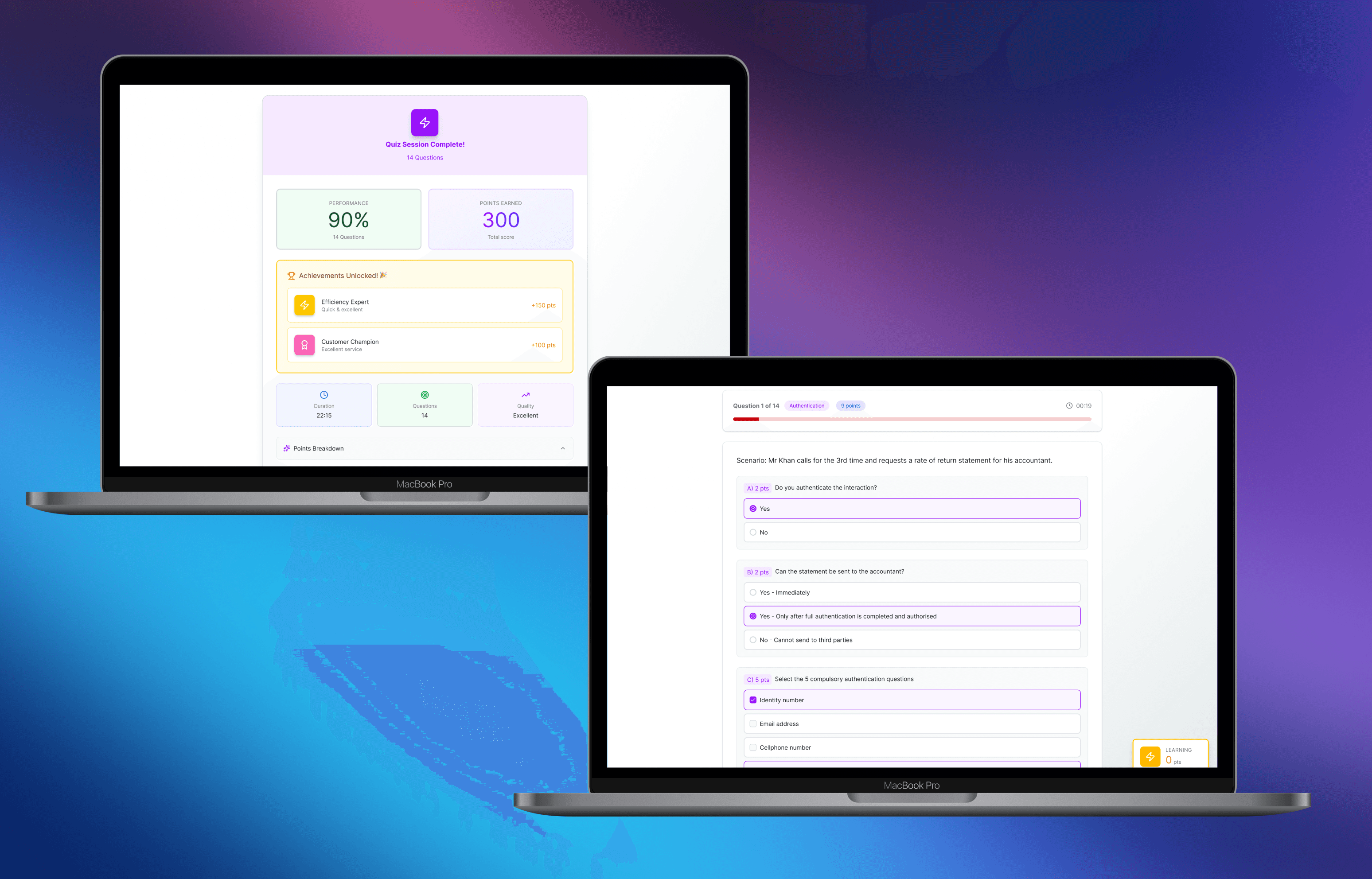
Learning Through Realistic, Unpredictable Challenges
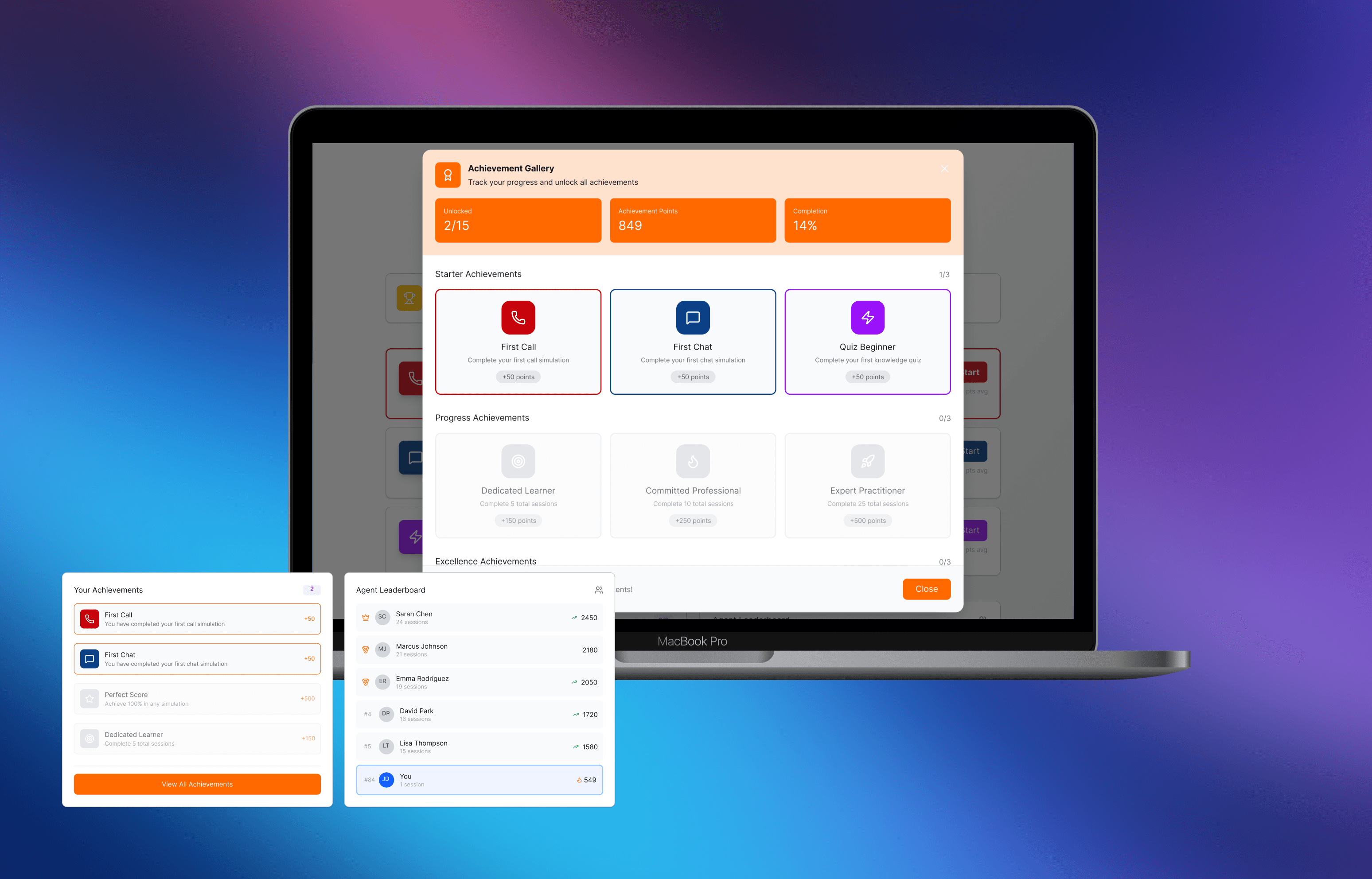
Static scripts make training predictable and unrealistic. To encourage adaptability, I designed a Randomized Scenario system that generates unique customer cases on each attempt; covering everything from investment queries to transaction issues. Each session ends with a performance summary, showing accuracy scores, emotional response quality, and navigation time. A leaderboard and achievement system introduces friendly competition, motivating learners to improve through recognition and measurable progress. The design encourages mastery through repetition, not memorization, aligning perfectly with how real customer challenges unfold.
Estimated results based on design assumptions and intended testing goals.
Projected Outcomes
The final proof of concept delivered a functional and visually complete training ecosystem, ready for testing with real users. It demonstrated how AI feedback, emotional context, and scenario randomization could combine to make training faster, smarter, and more engaging. Even within five days, the prototype showcased the potential for measurable learning outcomes improved accuracy, confidence, and learner satisfaction validating the platform’s value before full-scale development.
+40%
Navigation Accuracy
Learners can complete tasks within the Portfolio interface faster and with fewer errors.
+35%
Training Confidence
Users gan gain confidence in handling unpredictable customer scenarios after just three sessions.
60%
Learner Satisfaction
Feedback highlighted realism, AI guidance, and practical experience as top benefits.
Conclusion
This project proved how thoughtful UX design and AI-driven interaction can make professional training both practical and rewarding. By turning routine exercises into dynamic learning experiences, it sets the stage for a new kind of customer service education, one where growth feels natural, guided, and measurable.
more projects