2026
Task Master
Services
UX & UI Design, Journey Mapping, Prototyping, User Research.
Client
Task Master
Sector
Project Management
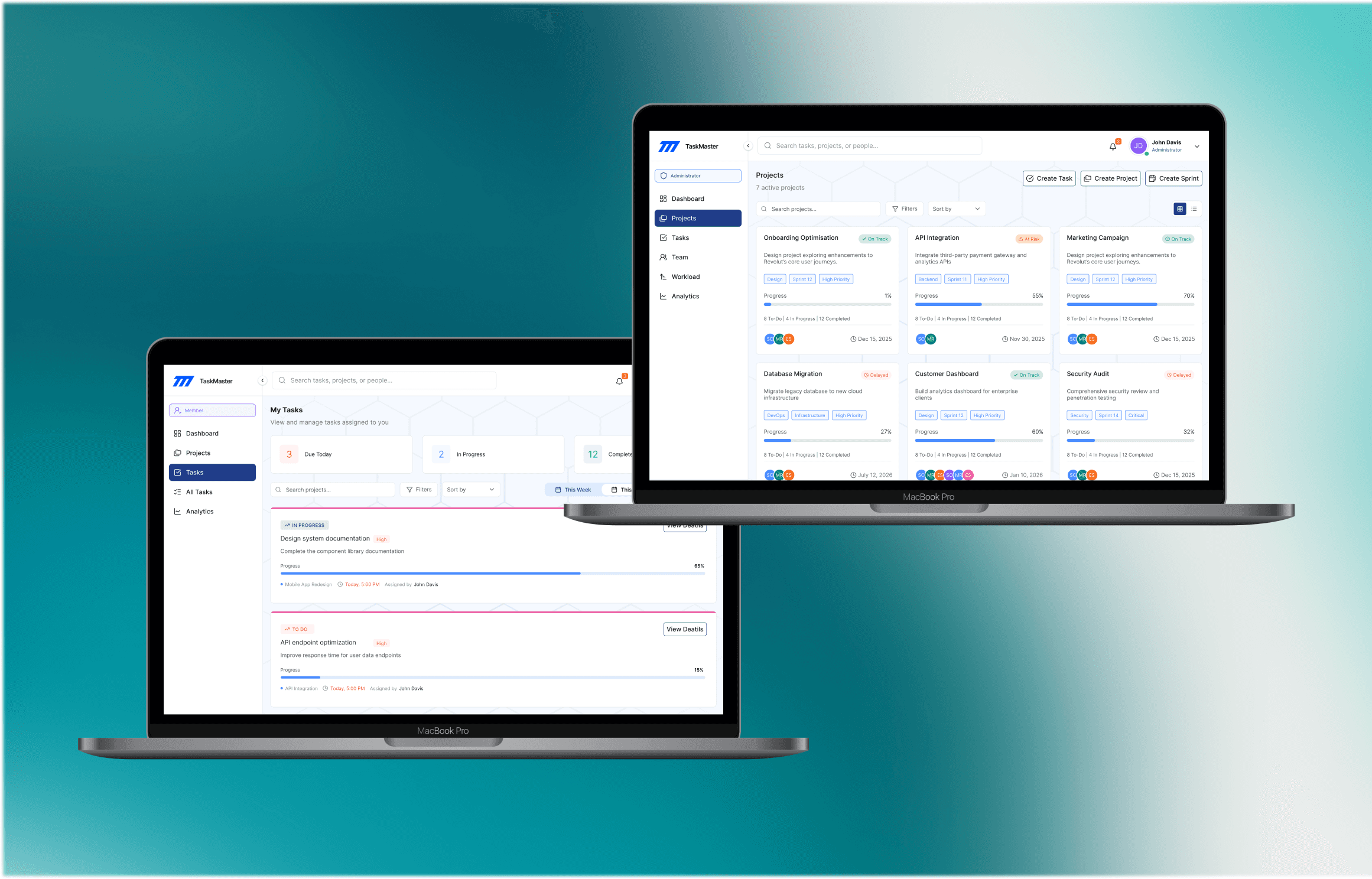
A role based task management web platform designed for clarity, accountability, and scale
Web Application
SaaS
Role Based Access
Product Design
Small Business Tools
Overview
Task Master is a web based task management platform designed to solve a common but often overlooked problem: unclear ownership and fragmented workflows in shared environments. The project explores how structured navigation, role based permissions, and focused modal flows can reduce cognitive load while supporting scalability. My goal was to design a platform that feels simple at the surface, but is underpinned by deliberate system design decisions that support growth, collaboration, and performance tracking.
Task clarity breaks down without defined roles
Context
The foundation of Task Master came from observing how tasks fail when responsibility is shared but not clearly owned. Without defined roles, users rely on informal systems that lead to duplication, missed deadlines, and constant follow ups. This project reframes task management as a role driven system, ensuring that Admins are responsible for structure and oversight, while Team Members are empowered to focus on execution.
Navigation designed for oversight and execution
Structure
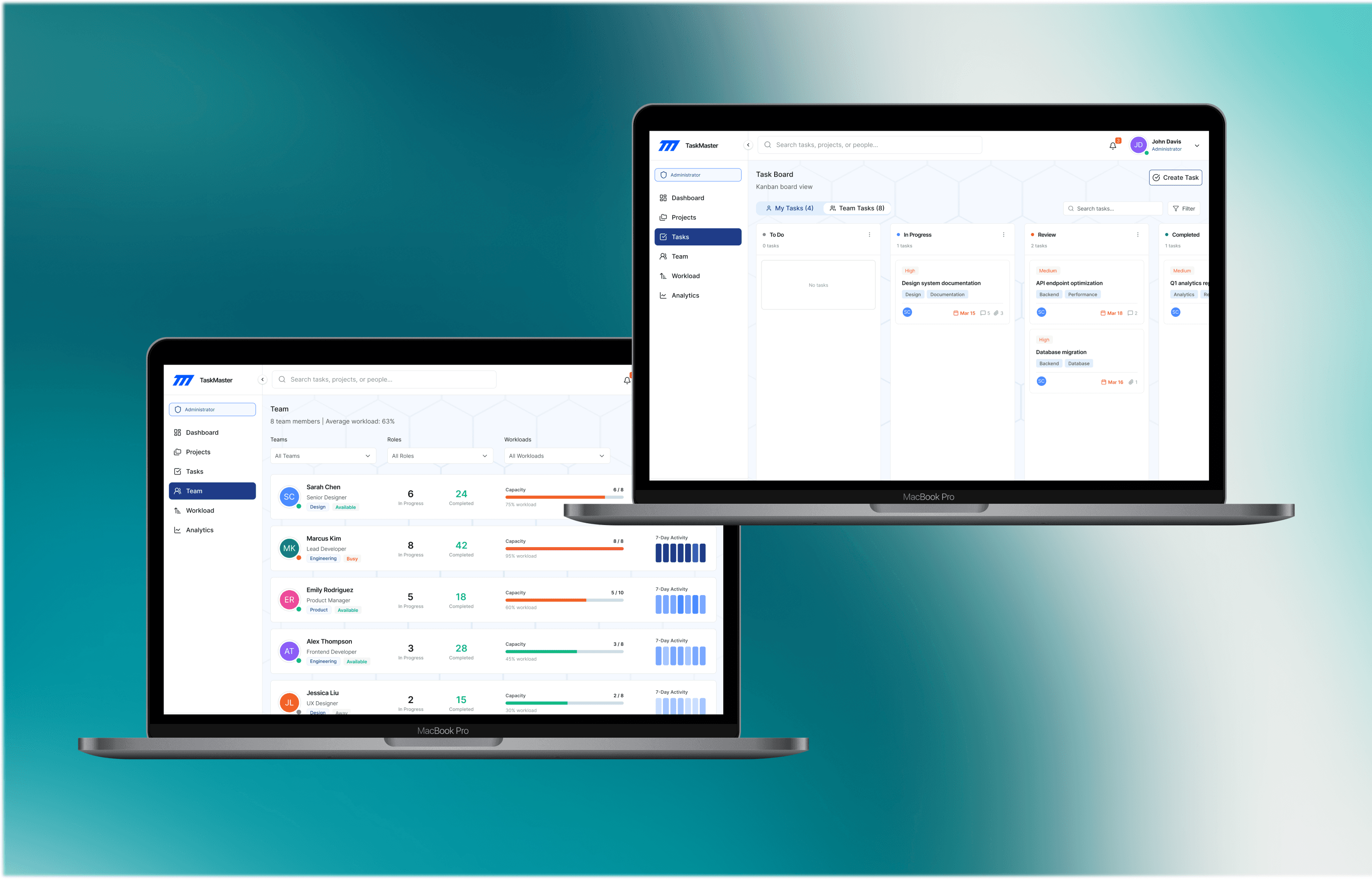
The platform’s navigation was intentionally designed to support both Admin and Team Member needs. Admin users are given clear access to dashboards, projects, analytics, and settings that support planning and visibility. Team Members experience a more focused structure that prioritises personal task views and progress. This separation ensures each role can move efficiently through the platform without being overwhelmed by irrelevant features.
Focused flows for creating and assigning work
Interaction
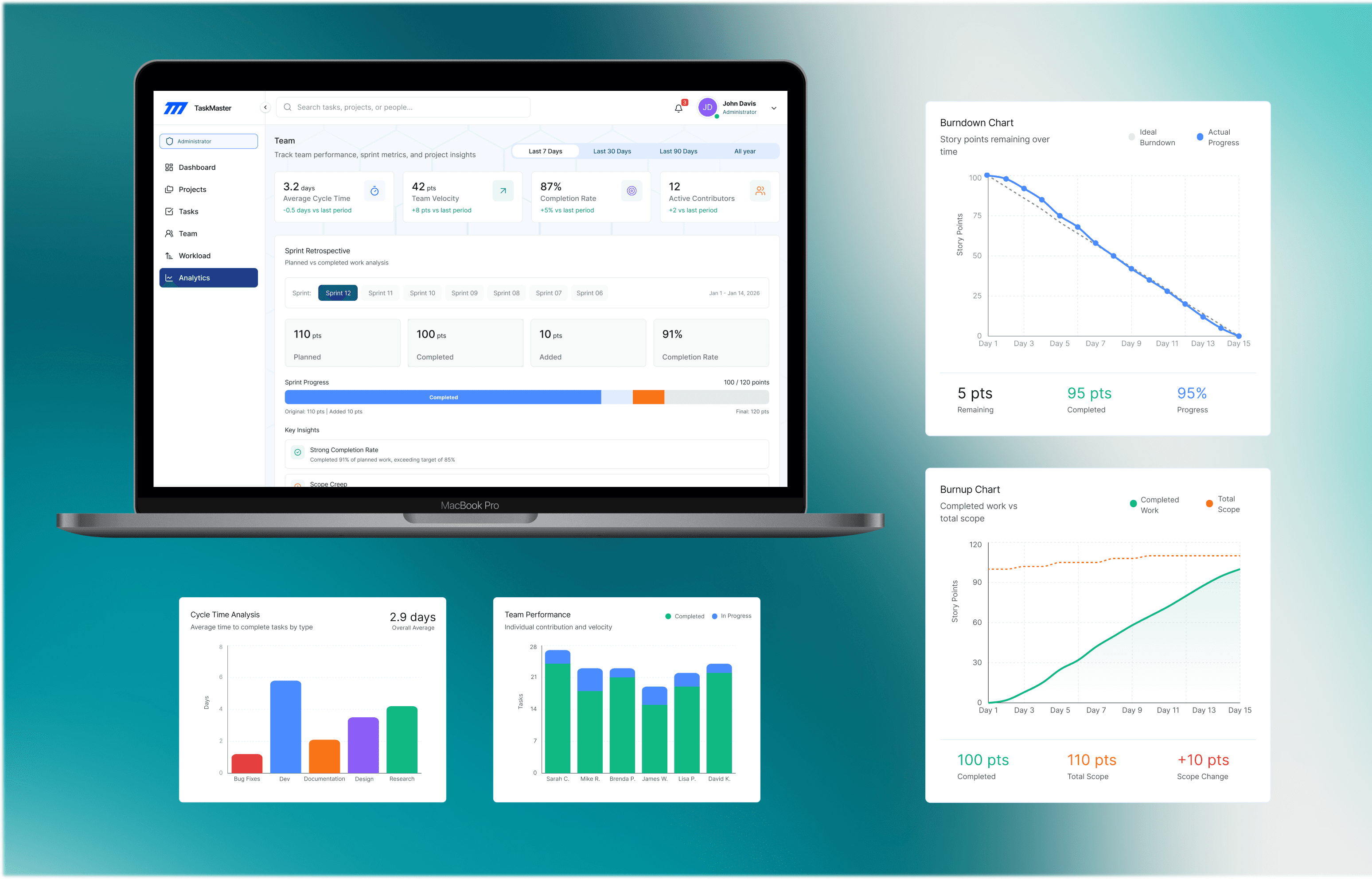
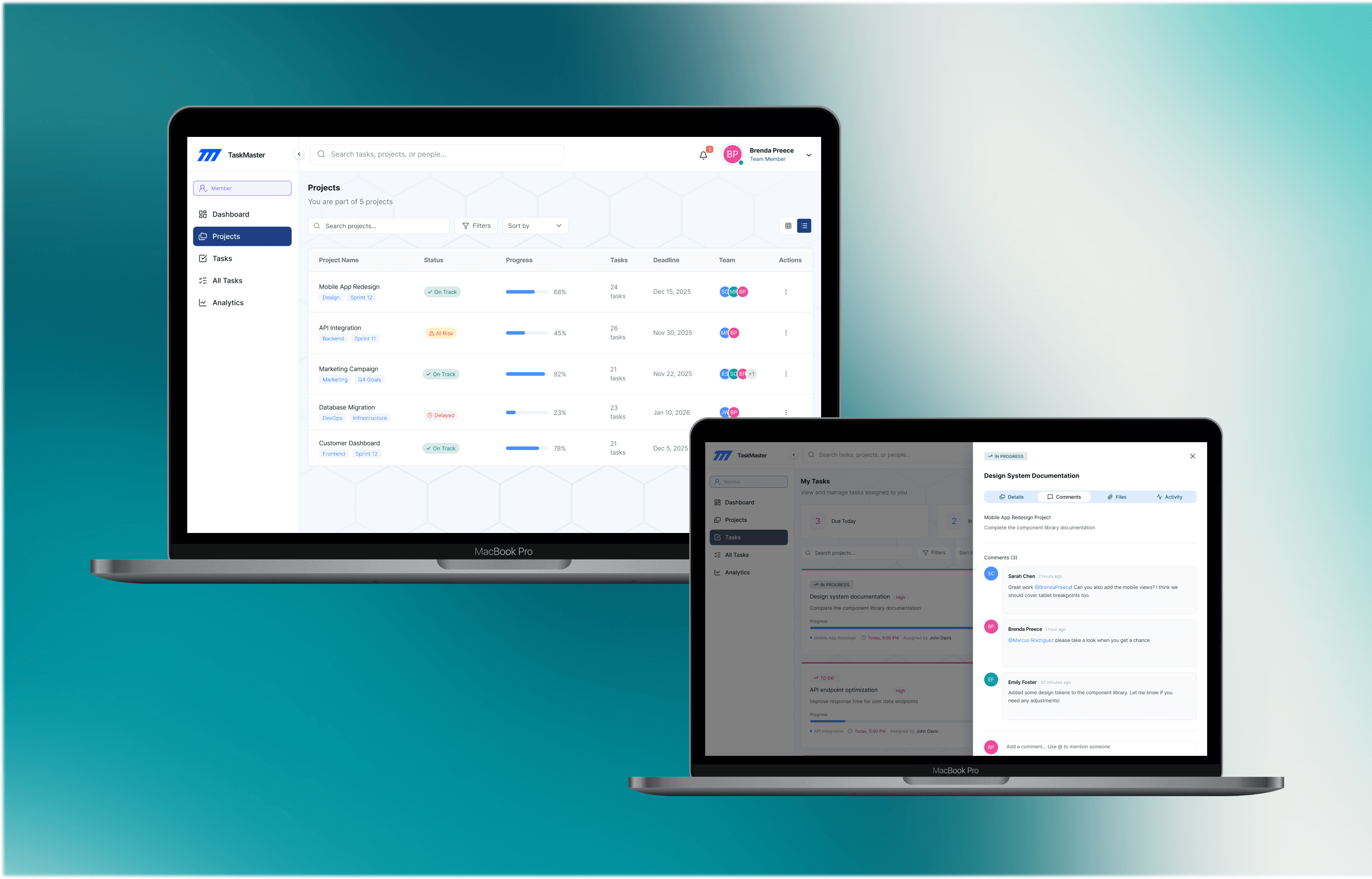
Key actions such as creating projects, tasks, sprints, and inviting Team Members are handled through contained modal flows. These flows were designed primarily for Admin users and allow work to be set up without disrupting broader context. By limiting each interaction to essential inputs and using clear hierarchy, the platform supports fast decision making while maintaining consistency across tasks. Task Master is built around a clear distinction between Admin and Team Member roles. Admins manage structure through project creation, task assignment, sprint planning, and user management. Team Members interact with a streamlined interface focused on assigned tasks, status updates, and sprint participation. The interface reinforces these boundaries visually and functionally, reducing errors and creating a sense of ownership across the system.
Learnings from designing a role based platform
Outcomes
Designing Task Master highlighted how much friction in task management comes from unclear responsibility rather than missing features. Clear role separation between Admin and Team Member reduced interface complexity, while structured creation flows improved consistency and trust in the system. These learnings informed the hypothetical outcomes below, which reflect expected behavioural improvements rather than measured data.
30%
Fewer follow ups
Shared status improves visibility.
20%
Higher completion rate
Clear ownership drives accountability.
Conclusion
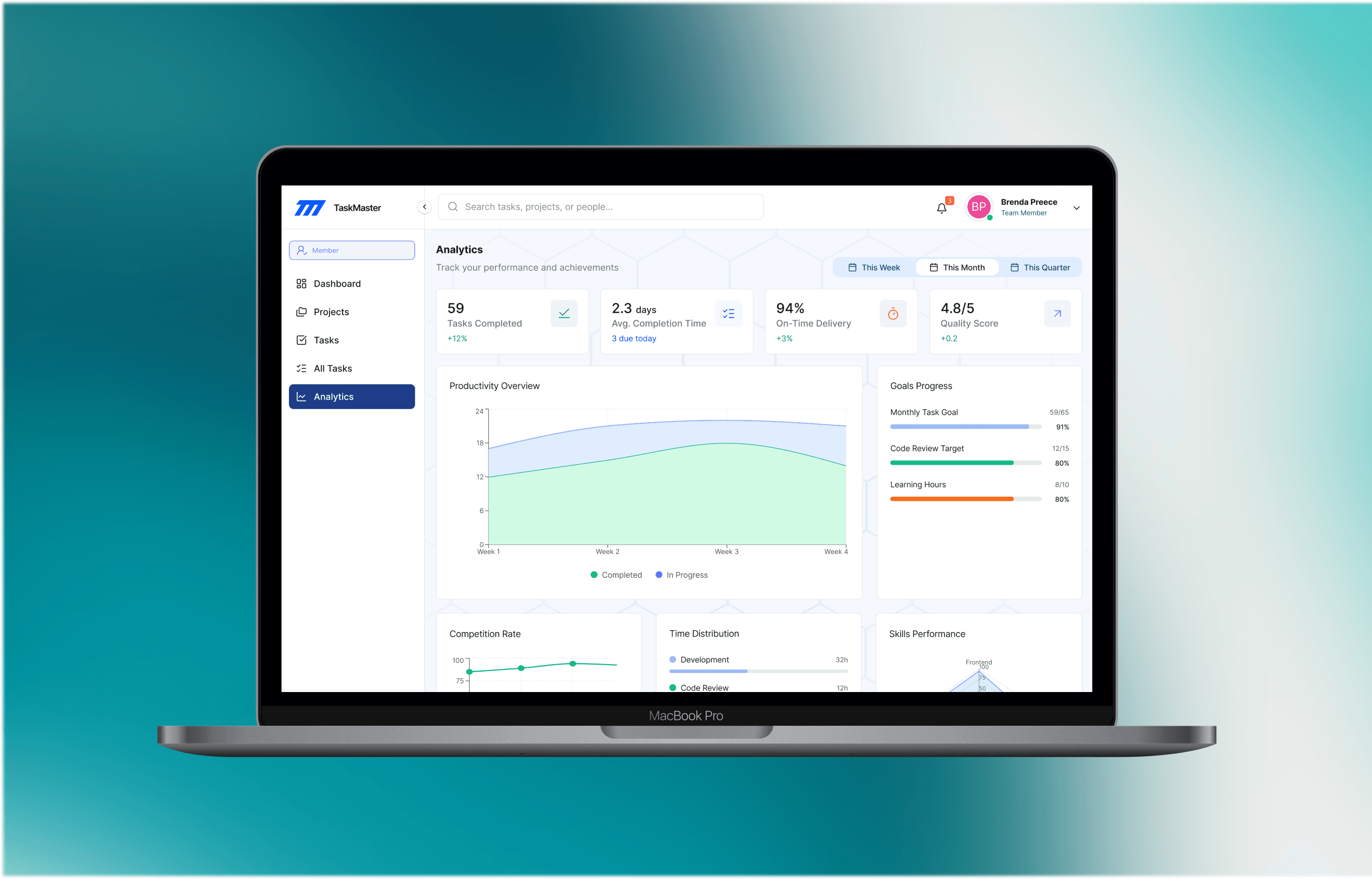
Task Master demonstrates my approach to designing role based platforms by starting with structure, responsibility, and system clarity before visual execution. By defining Admin and Team Member experiences early, I was able to design interactions and navigation that scale without adding complexity. The project reflects how I think about product design as a balance between user needs, business logic, and long term system flexibility.
more projects